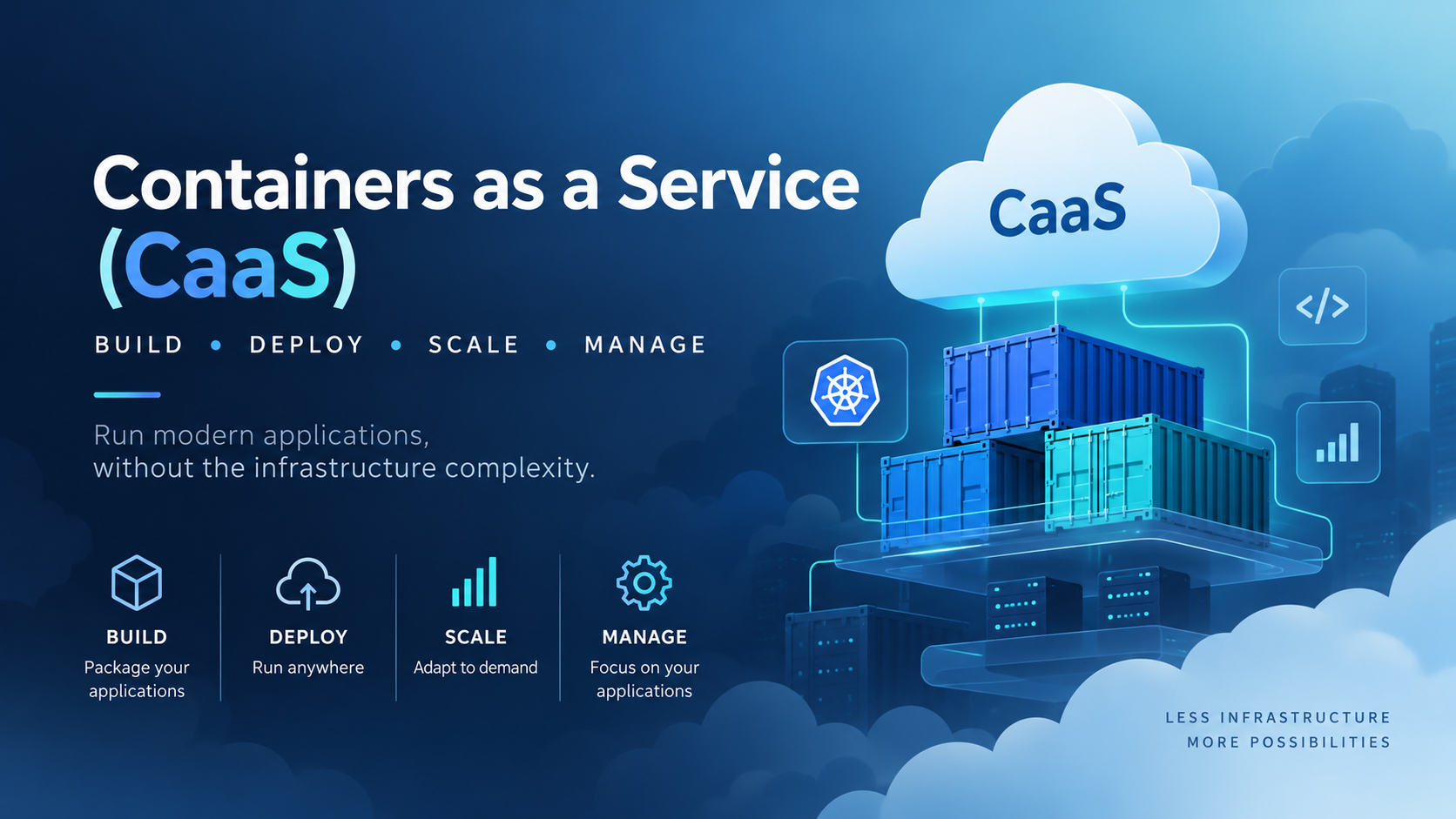
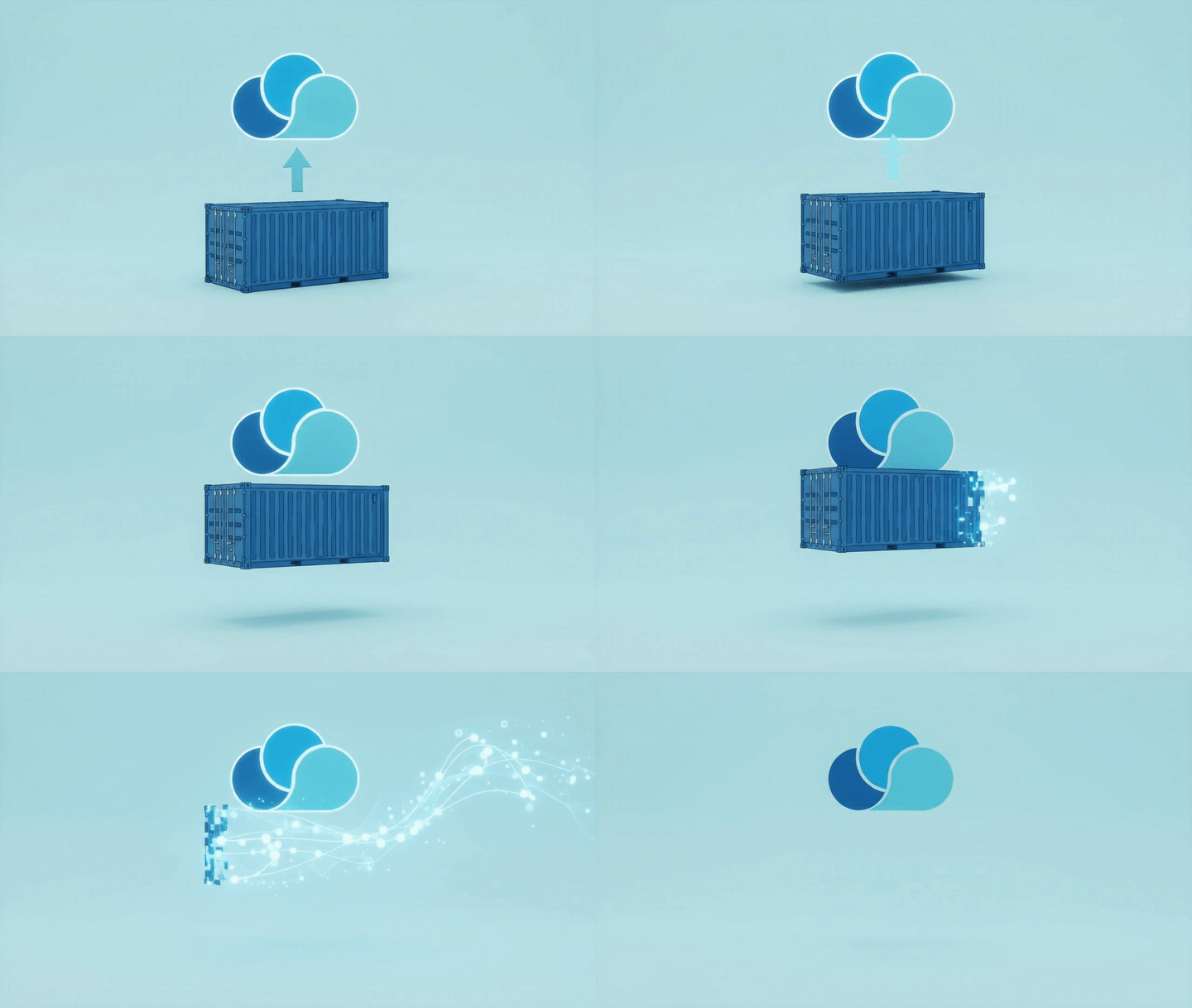
Containers-as-a-Service - CaaS
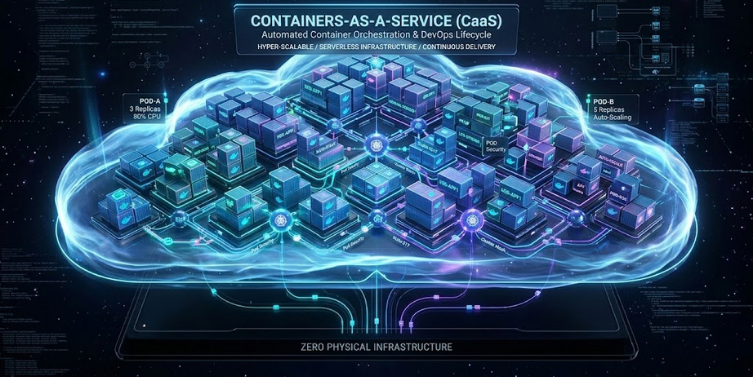
What is Containers as a Service (CaaS) technology?#
It is a cloud model that allows developers to deploy and manage containerized applications across a fully managed platform, freeing them from infrastructure complexities and providing a flexible, unified work environment
Before the emergence of Containers as a Service (CaaS) technology#
Before the emergence of Containers as a Service (CaaS) technology, the process of developing and deploying applications posed a significant and costly challenge for developers and tech companies. Initially, applications were installed directly on physical servers (Physical Hardware) in data centers, which created several problems for developers; the application would run perfectly on the developer's local machine, but crash as soon as it was moved to the physical server due to differences in versions, libraries, or operating systems. In addition, this approach caused a massive waste of resources because each application required an independent server.
To solve this, traditional virtual machines (Virtual Machines - VMs) emerged to partition physical servers, but they continued to suffer from heaviness, slow startup times, and high resource consumption. With the later advent of Docker, it became possible to package applications into lightweight containers; however, manually managing and deploying massive numbers of them remained a heavy and costly burden. This paved the way for the emergence of CaaS technology to solve these complexities at their roots. Below is a diagram illustrating how things were before and after its emergence.
![التاريخ [أدخل التاريخ، مثلاً 19 سبتمبر 2026م] إلى الأخ مدير إدارة التطوير المحترم من [اسمك الكامل] – متدرب في إدارة التطوير الموضوع طلب تمدي.png](https://s3.sohobcom.ye/sohobcom-website/images/sliders/com/_____________________________19________2026______________________________________________________________________________29c0e397.png)
Benefits of Containers as a Service (CaaS)#
Portability
Developers can work on the same code; this benefit solved the "works on my machine but doesn't run on the other machine" problem, as the biggest obstacle facing development and operations teams was the disparity between technical environments, and here comes the role of portability.
Scalability
CaaS technology allows developers to adjust and scale computing resources as needed to precisely match the actual requirements of the applications.
Fast coding:
It accelerates development and deployment cycles by providing ready-made, standardized environments that enable developers to focus on writing code and code updates, without having to deal with runtime environments and CI/CD pipelines.
Improved maintenance:
If a component within the container fails, the platform handles the issue and fixes it quickly to maintain application continuity.
![التاريخ [أدخل التاريخ، مثلاً 19 سبتمبر 2026م] إلى الأخ مدير إدارة التطوير المحترم من [اسمك الكامل] – متدرب في إدارة التطوير الموضوع طلب تمدي(1).png](https://s3.sohobcom.ye/sohobcom-website/images/sliders/com/_____________________________19________2026______________________________________________________________________________a73dd97d.png)
Comparison of Containers as a Service (CaaS) with other cloud models#
Containers as a Service (CaaS) sits right in the middle between PaaS and IaaS.
Infrastructure as a Service (IaaS):
What developers manage: The developer is responsible for the operating system, middleware, runtime environment, application, and data. Level of abstraction: Low; the developer has direct access to raw computing resources such as virtual machines (VMs) and storage units.
Containers as a Service (CaaS):
What developers manage The application and its specific configurations inside the containers.
Level of abstraction: Medium; the platform manages the cluster and the underlying operating system, while granting developers full control over the container environment.
Platform as a Service (PaaS):
What developers manage: The application and data only.
Level of abstraction: High; the cloud provider manages almost everything, and all the developer has to do is provide the source code for the platform to run and manage.
Function as a Service (FaaS):
What developers manage: The function code only.
Level of abstraction: Very high; the system runs individual, stateless functions automatically in response to events without any infrastructure management.
Software as a Service (SaaS):
There is nothing for the developer to manage here; they are merely an end user.
Level of abstraction: Complete; the service delivers the fully functional, ready-to-use software product to the user directly over the web.
![التاريخ [أدخل التاريخ، مثلاً 19 سبتمبر 2026م] إلى الأخ مدير إدارة التطوير المحترم من [اسمك الكامل] – متدرب في إدارة التطوير الموضوع طلب تمدي(2).png](https://s3.sohobcom.ye/sohobcom-website/images/sliders/com/_____________________________19________2026______________________________________________________________________________a9720978.png)
How CaaS technology helps companies implement a DevOps culture with ease:#
CaaS provides a single, unified working environment for everyone, where software development and IT operations teams work through Docker. Its function is to assemble the code and all the files and libraries the application needs into a single, fully encapsulated, and independent package. This encapsulation is achieved through a core Docker tool or file called a Dockerfile.
![التاريخ [أدخل التاريخ، مثلاً 19 سبتمبر 2026م] إلى الأخ مدير إدارة التطوير المحترم من [اسمك الكامل] – متدرب في إدارة التطوير الموضوع طلب تمدي(3).png](https://s3.sohobcom.ye/sohobcom-website/images/sliders/com/_____________________________19________2026______________________________________________________________________________0927ac67.png)
Rate this article
Be the first to rate this article
Comments & Discussion0
Related articles
Containers as a Service (CaaS): The Practical Guide to Running Apps in the Cloud Without the Server Headaches  DevOps & Containers
Containers as a Service (CaaS): The Practical Guide to Running Apps in the Cloud Without the Server Headaches
Learn what Containers as a Service (CaaS) really is, how it compares to Cloud VPS and Web Hosting, and how autonomous orchestration, self-healing, and zero-downtime rolling updates eliminate server management overhead.
mohammed al-monify